

Web Design Trends 2026: What Your Competitors Already Know
Web design trends for 2026 have dramatically shifted from simply looking good to actively adapting to user needs. In fact, visitors now expect websites to respond dynamically to their behavior, preferences, and history in real-time. This evolution isn’t surprising when you consider that over 80% of US customers make purchases using mobile devices and 40% of users will immediately switch to a competitor after a bad mobile experience.
Beyond esthetics, modern UI design is becoming increasingly intelligent and user-centric. With almost 252,000 new websites created daily, standing out requires embracing the latest website design trends that blend technology with human-centered experiences. AI is no longer just a buzzword but a practical element of new website design, powering personalization that deeply connects with users.
We’ve researched the cutting-edge UX UI trends that your competitors are already implementing. From performance-first design principles to AI-powered personalization, this guide will walk you through everything you need to know to stay competitive in 2026. After all, your website is often the first interaction customers have with your brand, and in today’s digital landscape, first impressions definitely count.
User-first design trends shaping 2026
The foundation of modern web design has shifted dramatically toward prioritizing user needs first and visual esthetics second. As we approach 2026, three user-centric trends are fundamentally reshaping how successful websites function.
Mobile-first and AMP as non-negotiables
The days of designing for desktop and adapting for mobile are long gone. With mobile devices generating over 60% of website traffic, creating experiences optimized for smartphones has become essential rather than optional. Consider this sobering statistic: 40% of users will immediately abandon your site for a competitor after a poor mobile experience.
Effective mobile-first design requires more than responsive layouts. It demands focusing on impactful “above-the-fold” content, simplified navigation, and touch-friendly interactions. Furthermore, Accelerated Mobile Pages (AMP) technology has evolved from a nice-to-have feature into a critical component of modern UI design.
AMP creates lightweight, instantly-loading pages that Google preloads in search results. This speed-focused approach delivers tangible benefits:
- Lower bounce rates and higher engagement
- Improved crawl rates and indexing efficiency
- Cleaner, distraction-free mobile interfaces
Accessibility as a creative default
Perhaps the most significant shift in web design trends for 2026 is how accessibility has transformed from a compliance afterthought into a creative advantage. This evolution comes at a critical moment, as new regulations take effect.
Starting April 24, 2026, websites must comply with Web Content Accessibility Guidelines (WCAG) 2.1 standards. This regulatory change makes accessibility a legal requirement rather than an optional consideration. Consequently, designers are integrating inclusive principles from the very beginning of projects.
Accessibility-driven design produces cleaner structured content, better color contrast, and clearer navigation patterns. Notably, these improvements benefit all users, not just those with disabilities. Building inclusively also expands audience reach, protects businesses from legal challenges, and strengthens brand trust.
Personalized journeys for every visitor
The third major trend redefining modern web design is hyper-personalization. Visitors now expect websites to adapt dynamically based on their behavior, preferences, and browsing history.
Advanced personalization delivers impressive results. According to case studies, personalized experiences can contribute up to 16% of direct-to-consumer revenue and increase grocery subscriptions by 13.5%. Additionally, sophisticated recommendation engines can drive up to 32% of total purchases.
Essentially, personalization is evolving beyond basic product suggestions toward fully adaptive experiences. Modern sites use AI to adjust layouts, populate pages with relevant content, and enhance interactions at critical touchpoints. This approach creates tailored experiences that make visitors feel recognized and valued.
The most effective personalization strategies combine data collection, user segmentation, and journey mapping. By analyzing demographics, browsing behavior, and past interactions, brands can create unique pathways that guide users through each stage of engagement.
Technology powering modern web design
Technology is quietly reshaping the foundations of modern web design. Behind today’s sleek interfaces lies an increasingly sophisticated tech stack that’s transforming how websites function, adapt, and scale.
AI as a co-designer
AI has evolved beyond simply generating content into becoming a trusted creative partner. In 2026, designers are collaborating with AI in real-time, shaping ideas together and receiving intelligent suggestions throughout the design process. This partnership has dramatically changed what’s possible in website design trends.
AI design assistants now suggest accessibility improvements, refine typography, and optimize color palettes based on real-world data. Moreover, some tools can run automated A/B tests, offering real-time recommendations on which designs perform best. For agencies managing multiple clients, this shift is particularly valuable – AI handles repetitive tasks while humans focus on creative direction and client relationships.
The most immediate benefit is speed. Projects that once took weeks now launch in days. Given that design systems are getting more intelligent, AI can identify inconsistencies, suggest improvements, and even auto-create design assets that perfectly align with brand guidelines. This allows designers to focus on solving bigger challenges instead of making repetitive tweaks.
Agentic websites that act for users
Perhaps the most significant leap forward is the emergence of agentic websites – intelligent systems that adapt, respond, and evolve rather than remaining static. These websites blur the line between design and behavior by actively working on users’ behalf.
What makes agentic websites revolutionary is their ability to adjust structure, tone, and content automatically based on user behavior. By observing where visitors click, how long they stay, and what they skip, these systems fine-tune the experience in real-time. For instance, a homepage might highlight different content based on a visitor’s patterns, while calls to action surface at more appropriate moments.
C3 Agentic AI Websites exemplifies this technology, turning websites into intelligent, interactive experiences that support curated conversations and customer journeys. Visitors can ask questions in natural language and receive contextual responses instantly, with no navigation required. The system then delivers personalized follow-ups and suggested actions based on the users’ interactions.
Design tokens for scalable systems
Behind the scenes, design tokens have become the backbone of scalable design systems. These tokens serve as the centralized repository where design decisions are stored and distributed across platforms.
Design tokens function as name/value pairs that capture various design decisions:
- Primitive tokens: The most basic form, reducing infinite possibilities to brand-relevant selections
- Semantic tokens: Carry meaning and imply how they should be applied
- Component tokens: Specific to individual components, typically referring to semantic tokens
The practical impact is substantial. Instead of hardcoding colors, spacing, or typography in multiple places, designers can update a single token to refresh styles everywhere. Large organizations managing multiple brands can adjust a single token to update styles consistently, avoiding mismatches and errors.
This approach creates a bridge between designers and developers. Updates that previously took hours can happen in minutes, while consistency becomes effortless across all touchpoints. For web creators managing client sites, tokens have become essential for keeping designs future-proof amid constant change.
The combined effect of these technologies creates websites that are simultaneously more intelligent, adaptive, and consistent – setting new standards for what’s possible in modern UI design and redefining the creator’s role from builder to orchestrator.
Esthetic shifts in modern UI design
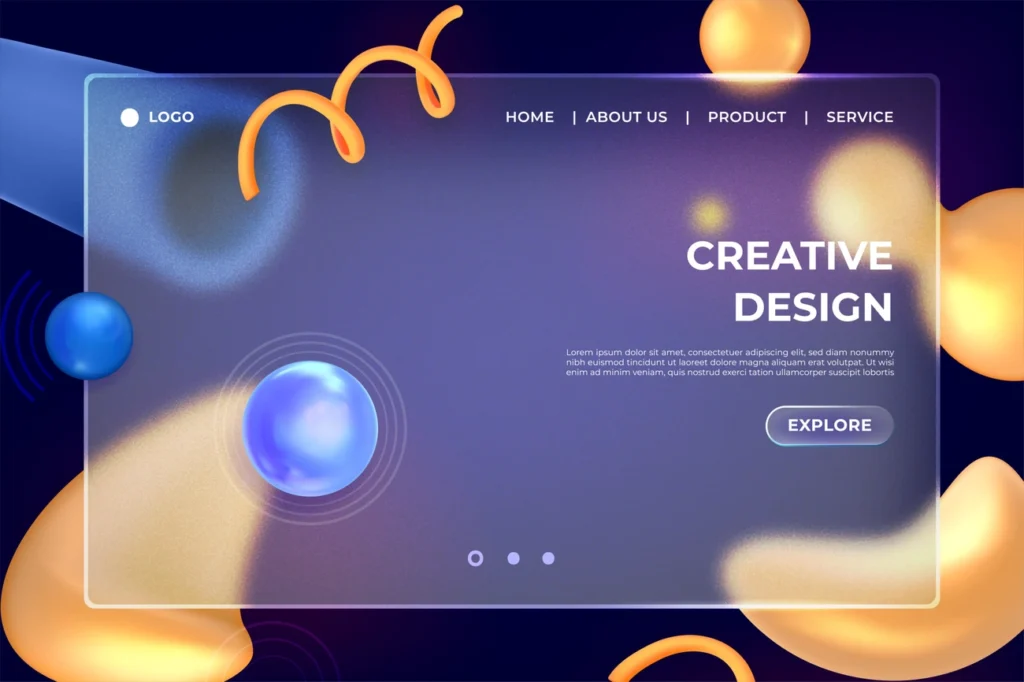
Image Source: Zarma Type –
Visual esthetics have become the silent storytellers of the digital experience, going beyond surface beauty to reinforce brand identity and guide users through journeys. As modern UI design continues to evolve in 2026, three distinct visual trends are reshaping how websites look and feel.
Organic shapes and anti-grid layouts
The rigid geometry that dominated web design for years is giving way to something more fluid and natural. Designers are increasingly replacing sharp corners and perfect symmetry with flowing, organic shapes that mimic forms found in nature. This shift helps digital experiences feel more approachable and human.
Anti-grid layouts challenge conventional design rules by introducing rhythm, movement, and playfulness that break free from rigid structures. Instead of predictable columns and rows, these designs incorporate asymmetrical elements, overlapping content, and dynamic spacing. The result creates visual interest that draws users deeper into the experience.
This trend reflects a broader desire for humanity in technology. As digital experiences become more automated and intelligent, users increasingly crave interfaces that feel warm and natural. Soft gradients, layered masks, and irregular layouts signal creativity while making brands feel more authentic.
Neo-brutalism and cute-alism
Neo-brutalism stands as perhaps the most striking visual rebellion in modern web design. This style embraces high contrast, blocky layouts, bold colors, thick borders, and intentionally “unpolished” elements. Unlike traditional minimalism, neo-brutalist sites celebrate their digital nature with oversized typography and stark system fonts.
What makes this trend particularly interesting is its evolution into “cute-alism” – an unexpected fusion of two contrasting esthetics:
- Raw, utilitarian brutalist foundations
- Playful, kawaii-inspired details with bright colors and cartoon elements
This design approach creates websites that feel both chaotic and charming – the digital equivalent of stepping into a messy, sticker-covered scrapbook. The clash between brutalism’s simplicity and candy-colored energy produces experiences that are memorable precisely because they shouldn’t work together.
Cute-alism works especially well for brands targeting younger audiences like Gen Z and Gen Alpha. Nevertheless, it’s not suitable for businesses needing to project high levels of professionalism, such as law firms or financial institutions.
Frosted glass and light skeuomorphism
After years of flat design dominance, dimensionality is making a sophisticated comeback through frosted glass effects. This esthetic creates interfaces that feel simultaneously tactile and futuristic through translucent layers, diffused shadows, and subtle blur effects.
The frosted glass look adds depth while rounded edges and soft shadows enhance a sense of touch. Importantly, modern implementation tools have made this once-complex effect much easier to execute. The backdrop-filter: blur() CSS property allows designers to create this effect with minimal code, though browser support requires thoughtful fallback planning.
Paired with this trend is light skeuomorphism – a refined return to digital elements that subtly mimic real-world objects. Unlike the heavy textures of early digital skeuomorphism, this modern interpretation uses delicate gradients, soft shadows, and lightly embossed effects to suggest depth without overwhelming the interface.
Both trends communicate modernity and elegance while maintaining a human touch. They’re particularly effective for premium brands and experiences where polish and sophistication are brand priorities.
Interactive and immersive experiences
Beyond static visuals, the modern web design landscape in 2026 thrives on dynamic interactions that respond to user behavior. Interactive elements no longer just enhance websites—they define the experience itself.
Microinteractions and motion design
Microinteractions have evolved from decorative elements into purposeful communication tools. These subtle movements serve as intentional feedback mechanisms that confirm user actions, guide navigation, and reduce cognitive load. A button that gently shifts when hovered or a form that slightly shakes when missing required information creates natural responsiveness that feels genuinely helpful.
The most effective microinteractions inject personality into digital experiences while maintaining performance. Successful implementations balance emotional design—creating unexpected, delightful moments—with technical considerations like lightweight animations and accessibility options for users with vestibular disorders.
Conversational UIs and dynamic cursors
By 2026, conversational interfaces have expanded beyond corner chatbots into fully embedded features throughout websites. These AI-driven interfaces detect emotion through typing cadence, voice tone, or facial cues (with permission), then adapt accordingly. For instance, a productivity tool might streamline its interface after detecting user frustration, whereas a wellness app might gently darken its color scheme when sensing stress.
Similarly, dynamic cursors transform from static pointers into interactive guides. Custom cursors enhance interactivity by drawing attention to clickable elements, provide feedback by changing appearance during hover states, and reinforce branding through consistent visual language. Color-shifting cursors that differentiate between text and buttons create clearer navigation paths, whereas subtle expansion effects emphasize interactive elements.
Scroll-triggered animations and storytelling
Scroll animations have revolutionized digital storytelling by transforming a simple action into an immersive narrative device. Using technologies like GSAP, websites now create jaw-dropping scroll effects with minimal code. These animations aren’t merely decorative—they’re strategic tools that control user journeys and reveal content at precisely the right moment.
Effective scroll-triggered animations grasp attention and envelop visitors in content that conforms to scrolling tempo. Images zoom in or shrink as they enter the viewport, while text elements fade in with perfect timing. The most sophisticated implementations use horizontal scrolling, parallax effects, and carefully choreographed movements to unfold narratives like chapters in a story, making content memorable through purposeful motion.
Strategic design for future-ready websites
In 2026, strategic website development extends beyond esthetics and functionality to embrace responsibility and business integration. Forward-thinking designers now approach projects with long-term sustainability and performance as foundational requirements.
Sustainable and ethical web practices
Ethical web design has evolved from optional to essential, with the W3C’s Sustainable Web Guidelines setting industry standards for responsible digital creation. These guidelines emphasize reducing complexity, improving accessibility, and encouraging efficiency in web technologies. Subsequently, sites optimized for sustainability consume less power, produce fewer emissions, and support longer device lifespans through backward compatibility.
The environmental impact of digital experiences is increasingly measurable, with studies showing the internet contributes nearly 4% of global carbon emissions—comparable to the aviation industry. In response, ethical designers are implementing practical changes like switching to green web hosting, compressing images, and removing outdated plugins.
The connected stack: from site to business hub
Websites have transformed from isolated digital storefronts into comprehensive business command centers. Through intelligent integration, modern sites connect entire business stacks—from CRM and marketing automation to data analytics.
This connected architecture delivers remarkable results, as evidenced by Nursa’s integrated website that increased speed by 70% while making changes 10 times faster. For small businesses, integration transforms scattered tools into unified systems that eliminate manual tasks and reduce operational costs by approximately 30%.
Performance-first creativity and speed
Performance has become a design principle in its own right, with loading speed directly impacting business outcomes. Even a 1-second delay can reduce conversions by 7%, hence the shift toward performance-first creativity.
Web creators now approach esthetics with speed as a constraint rather than an afterthought. This balancing act requires disciplined optimization—from right-sizing images to reducing server requests. Ultimately, this approach yields tangible benefits: pages that meet Core Web Vitals experience 2.5x higher retention on mobile devices.
Conclusion
Web design continues to evolve at an unprecedented pace as we approach 2026. Therefore, staying ahead of trends isn’t merely about esthetics—it’s about creating intelligent, adaptive experiences that genuinely connect with users. The shift toward mobile-first design, accessibility standards, and personalized journeys clearly demonstrates how user needs now drive design decisions rather than the other way around.
AI has transformed from a buzzword into an essential co-designer, while agentic websites actively work on users’ behalf instead of remaining static digital brochures. Additionally, design tokens have emerged as the backbone of scalable systems, allowing for consistent experiences across all touchpoints.
Visually, we’re witnessing a fascinating rebellion against convention through organic shapes, neo-brutalism, and the return of dimensionality with frosted glass effects. These esthetic shifts reflect a broader desire for humanity in our increasingly digital world.
The future belongs to websites that balance immersive interactions with responsible development practices. Microinteractions, conversational UIs, and scroll-triggered animations create memorable experiences, while sustainable web practices address growing environmental concerns. Furthermore, the connected stack transforms websites from isolated storefronts into comprehensive business hubs.
Speed and performance have undoubtedly become design principles in their own right. After all, even the most beautiful website fails if users abandon it due to slow loading times.
The competitive edge in 2026 will come from websites that blend technological innovation with human-centered design principles. By embracing these trends thoughtfully rather than chasing every shiny new feature, you’ll create digital experiences that truly resonate with your audience and stand out in an increasingly crowded digital landscape.
FAQs
Q1. How is AI changing web design in 2026? AI has become an integral part of web design, acting as a co-designer to suggest improvements, optimize color palettes, and even run automated A/B tests. It handles repetitive tasks, allowing designers to focus on creative direction and solving bigger challenges.
Q2. What are agentic websites and how do they work? Agentic websites are intelligent systems that adapt and evolve based on user behavior. They automatically adjust structure, content, and tone in real-time, creating personalized experiences for each visitor without requiring manual navigation.
Q3. What visual trends are shaping modern UI design? Key visual trends include organic shapes and anti-grid layouts for a more natural feel, neo-brutalism and “cute-alism” for striking contrasts, and frosted glass effects with light skeuomorphism for added depth and sophistication.
Q4. How are interactive elements enhancing user experience? Interactive elements like microinteractions, conversational UIs, dynamic cursors, and scroll-triggered animations are creating more immersive and responsive experiences. These features provide feedback, guide navigation, and transform simple actions into engaging storytelling devices.
Q5. Why is performance-first creativity important in web design? Performance-first creativity is crucial because loading speed directly impacts user engagement and business outcomes. Designers now approach esthetics with speed as a constraint, balancing visual appeal with optimized performance to improve user retention and conversion rates.


